Support our educational content for free when you purchase through links on our site. Learn more
75+ Mindful Quotes on Happiness & Inner Peace (2026) ✨

Yes, the answer is a resounding yes: the world’s greatest minds have left us a treasure trove of wisdom specifically designed to cultivate happiness and inner peace. You don’t need to search for a secret formula because Are there any mindful quotes from famous authors or thought leaders on happiness and inner peace? is a question that has been answered by everyone from Marcus Aurelius to modern psychologists like Jay Shetty.
Imagine sitting in a chaotic subway car, surrounded by the stress of a thousand rushing commuters, yet feeling an inexplicable calm wash over you. That shift happened the moment you read a single sentence from Thich Nhat Hanh about “peace being every step.” It turns out, a well-placed quote can act as a neurological interrupt, instantly shifting your brain from panic mode to presence.
Research from the Journal of Positive Psychology suggests that engaging with positive, meaningful text can reduce cortisol levels and improve emotional regulation in as little as 10 seconds. We have curated over 75 powerful quotes to ensure you never run out of fuel for your soul.
Key Takeaways
- Ancient wisdom meets modern science: Quotes from Stoics, Buddhists, and contemporary psychologists offer proven strategies for emotional regulation and resilience.
- Actionable mindfulness: These aren’t just pretty words; they are tools for the “Spot, Stop, Swap” technique to rewire your brain for inner peace.
- A curated collection: We provide 75+ timeless quotes covering diverse perspectives, from the Stoic calm of Marcus Aurelius to the spiritual joy of Rumi.
- Distinction matters: Learn the critical difference between mindful acceptance and toxic positivity to ensure your practice is authentic and effective.
Table of Contents
- ⚡️ Quick Tips and Facts
- 📜 The Ancient Roots of Serenity: A Brief History of Mindful Wisdom
- 📚 75+ Timeless Mindful Quotes from Famous Authors on Happiness and Inner Peace
- 1. The Stoic Sage: Marcus Aurelius and the Art of Unshakeable Calm
- 2. The Poet of Presence: Rumi’s Guide to the Joyful Soul
- 3. The Modern Philosopher: Thich Nhat Hanh on Breathing and Being
- 4. The Literary Giant: Maya Angelou’s Words on Resilience and Light
- 5. The Psychologist’s Insight: Viktor Frankl on Finding Meaning in Suffering
- 6. The Minimalist Mindset: Henry David Thoreau and the Simple Life
- 7. The Spiritual Teacher: Eckhart Tolle on the Power of Now
- 8. The Business Visionary: Marshall Goldsmith on Leadership and Inner Stillness
- 9. The Creative Muse: Virginia Woolf on Mental Clarity and Solitude
- 10. The Humanist Voice: Albert Camus on Happiness Amidst Absurdity
- 🧠 Decoding the Science: How Mindful Quotes Rewire Your Brain for Peace
- 🛠️ Practical Application: How to Turn Famous Quotes into Daily Mindfulness Rituals
- 🆚 Mindful Quotes vs. Toxic Positivity: Knowing the Difference
- 🌍 Global Perspectives: Eastern vs. Western Thought Leaders on Inner Peace
- 📝 Quick Tips and Facts: The Psychology of Affirmations
- 🏆 Conclusion: Your Journey to a Peaceful Mind Starts with a Single Sentence
- 🔗 Recommended Links: Books, Courses, and Apps to Deepen Your Practice
- ❓ FAQ: Common Questions About Mindful Quotes and Happiness
- 📖 Reference Links: Sources and Further Reading
⚡️ Quick Tips and Facts
Before we dive into the deep end of literary wisdom, let’s get our feet wet with some rapid-fire truths about mindful quotes and happiness. You might think a quote is just a pretty sentence, but at Mindful Quotes™, we know it’s a neurological hack for your brain.
Here is the lowdown on why these words matter:
- The 10-Second Rule: It takes roughly 10 seconds for a mindful quote to shift your brain from “fight or flight” (amygdala activation) to “rest and digest” (parasympathetic nervous system).
- The “Spot, Stop, Swap” Method: Popularized by Jay Shetty, this technique involves noticing a negative thought, stopping the narrative, and swapping it with a truth-based affirmation. It’s not about toxic positivity; it’s about emotional accuracy.
- Joy vs. Pleasure: As Venerable Fulton J. Shen noted, pleasure is external and fleeting, while joy is internal and enduring. Joy comes from within.
- The Harvard Emotion List: Researchers at Harvard have identified over 27 distinct emotions. Expanding your vocabulary from “I’m sad” to “I’m disappointed” or “I’m overwhelmed” actually helps your brain regulate those feelings better.
- The Power of Questions: Instead of demanding answers, ask questions. As Shetty says, questions are the most powerful invention because they uplift rather than confront.
Did you know? A study published in the Journal of Positive Psychology found that people who wrote down three things they were grateful for daily reported higher levels of happiness and lower levels of depression just three weeks later.
If you are wondering, “What exactly makes a quote ‘mindful’?” we have a whole article dedicated to that. Check out our guide on What is a mindful quote about happiness? to understand the mechanics behind the magic.
📜 The Ancient Roots of Serenity: A Brief History of Mindful Wisdom

You might think mindfulness is a modern buzzword invented by tech bros in Silicon Valley, but you are wrong. The quest for inner peace is as old as humanity itself.
Long before the term “mindfulness” hit the bestseller lists, ancient philosophers were scribling notes on papyrus and stone about how to live a good life. The Stoics in Rome, the Buddhists in India, and the Taoists in China were all wrestling with the same question: How do I find peace when the world is falling apart?
The Stoic Foundation
The Stoics, like Marcus Aurelius and Seneca, believed that inner peace comes from controlling your reactions, not your circumstances. They taught that we cannot control the weather, the economy, or other people’s opinions, but we have absolute sovereignty over our own minds.
“You have power over your mind – not outside events. Realize this, and you will find strength.” – Marcus Aurelius
This isn’t just philosophy; it’s psychological armor.
The Eastern Influence
While the West was building empires, the East was building inner sanctuaries. Buddhism introduced the concept of dukkha (suffering) and the path to nirvana (liberation). Taoism taught the art of Wu Wei (effortless action), suggesting that peace comes from flowing with the universe rather than fighting it.
The Evolution to Modern Thought
Fast forward to the 20th century, and figures like Thich Nhat Hanh brought these ancient concepts to the West, stripping away the religious dogma and focusing on mindful breathing and present-moment awareness. Today, we see this evolution in the work of Eckhart Tolle and Brené Brown, who blend ancient wisdom with modern psychology.
The thread connecting Seneca to Shetty is the same: Happiness is a practice, not a destination.
📚 75+ Timeless Mindful Quotes from Famous Authors on Happiness and Inner Peace
We didn’t just scrape the surface; we dove into the ocean. While Amanda Zurface’s article offers a beautiful collection of 50 quotes focused on Christian joy, we have curated a comprehensive list of over 75 quotes spanning Stoicism, Eastern philosophy, modern psychology, and literature.
These aren’t just “feel-good” sayings; they are actionable insights from the greatest minds in history. We’ve organized them by the thinker who delivered them, so you can find the voice that resonates with your current state of mind.
1. The Stoic Sage: Marcus Aurelius and the Art of Unshakeable Calm
Marcus Aurelius, the Roman Emperor who wrote Meditations in his tent during a war, is the ultimate example of inner peace amidst chaos.
- “The happiness of your life depends upon the quality of your thoughts.”
- “Waste no more time arguing about what a good man should be. Be one.”
- “If you are distressed by anything external, the pain is not due to the thing itself, but to your estimate of it; and this you have the power to revoke at any moment.”
- “Very little is needed to make a happy life; it is all within yourself, in your way of thinking.”
- “When you arise in the morning, think of what a precious privilege it is to be alive – to breathe, to think, to enjoy, to love.”
- “Accept the things to which fate binds you, and love the people with whom fate brings you together, but do so with all your heart.”
- “The best revenge is to be unlike him who performed the injury.”
- “Confine yourself to the present.”
- “You don’t have to turn this into something. It doesn’t have to upset you.”
- “The soul becomes dyed with the color of its thoughts.”
2. The Poet of Presence: Rumi’s Guide to the Joyful Soul
Rumi, the 13th-century Persian poet, spoke of love and presence in a way that transcends time. His words are less about logic and more about feling.
- “Let yourself be silently drawn by the strange pull of what you really love. It will not lead you astray.”
- “The wound is the place where the Light enters you.”
- “Stop acting so small. You are the universe in ecstatic motion.”
- “Yesterday I was clever, so I wanted to change the world. Today I am wise, so I am changing myself.”
- “Don’t be satisfied with stories, how things have gone with others. Unfold your own myth.”
- “What you seek is seeking you.”
- “Silence is the language of God, all else is poor translation.”
- “Sell your cleverness and buy bewilderment.”
- “Be like a bird perched on a weak branch that knows the branch will break, but the bird still sings.”
- “You were born with wings, why prefer to crawl through life?”
3. The Modern Philosopher: Thich Nhat Hanh on Breathing and Being
Thich Nhat Hanh, the Vietnamese Zen master, taught that mindfulness is simply being alive in the present moment.
- “Breath is the bridge which connects life to consciousness, which unites your body to your thoughts.”
- “Peace is every step.”
- “The present moment is filled with joy and happiness. If you are attentive, you will see it.”
- “Smile, breathe, and go slowly.”
- “Feelings come and go like clouds in a windy sky. Conscious breathing is my anchor.”
- “To beautiful means to be yourself. You don’t need to be accepted by others. You need to accept yourself.”
- “Hope is important because it can make the present moment less difficult to bear. If we believe that tomorrow will better, we can bear a hardship today.”
- “Walk as if you are kissing the Earth with your feet.”
- “People have a hard time letting go of their suffering. Out of a fear of the unknown, they prefer suffering that is familiar.”
- “The seed of suffering in you may be strong, but don’t wait until you have no more suffering before allowing yourself to be happy.”
4. The Literary Giant: Maya Angelou’s Words on Resilience and Light
Maya Angelou knew a thing or two about overcoming adversity and finding happiness through resilience.
- “There is no greater agony than bearing an untold story inside you.”
- “You may not control all the events that happen to you, but you can decide not to be reduced by them.”
- “If you don’t like something, change it. If you can’t change it, change your attitude.”
- “Success is liking yourself, liking what you do, and liking how you do it.”
- “Nothing will work unless you do.”
- “My mission in life is not merely to survive, but to thrive; and to do so with some passion, some compassion, some humor, and some style.”
- “Love recognizes no barriers. It jumps hurdles, leaps fences, penetrates walls to arrive at its destination full of hope.”
- “We delight in the beauty of the butterfly, but rarely admit the changes it has gone through to achieve that beauty.”
- “When great trees fall, rocks on distant hills shudder.”
- “Try to be a rainbow in someone’s cloud.”
5. The Psychologist’s Insight: Viktor Frankl on Finding Meaning in Suffering
Viktor Frankl, a Holocaust survivor and psychiatrist, taught that meaning is the primary drive of human life.
- “Everything can be taken from a man but one thing: the last of the human freedoms—to choose one’s attitude in any given set of circumstances.”
- “Those who have a ‘why’ to live, can bear with almost any ‘how’.”
- “When we are no longer able to change a situation, we are challenged to change ourselves.”
- “Happiness cannot be pursued; it must ensue.”
- “The one thing you can’t take away from me is the way I choose to respond to what you do to me.”
- “Don’t aim at success. The more you aim at it and make it a target, the more you are going to miss it.”
- “Between stimulus and response there is a space. In that space is our power to choose our response.”
- “Life is never made unbearable by circumstances, but only by lack of meaning and purpose.”
- “What is to give light must endure burning.”
- “The salvation of man is through love and in love.”
6. The Minimalist Mindset: Henry David Thoreau and the Simple Life
Henry David Thoreau retreated to Walden Pond to prove that simplicity is the key to a rich life.
- “I went to the woods because I wished to live deliberately, to front only the essential facts of life.”
- “Simplicity, simplicity, simplicity! I say, let your affairs be as two or three, and not a hundred or a thousand.”
- “The mass of men lead lives of quiet desperation.”
- “It is never too late to give up your prejudices.”
- “If a man does not keep pace with his companions, perhaps it is because hears a different drummer.”
- “Our life is fritered away by detail… Simplify, simplify.”
- “The only wealth is life.”
- “I learned this, at least, by my experiment: that if one advances confidently in the direction of his dreams, and endeavors to live the life which he has imagined, he will meet with a success unexpected in common hours.”
- “Let us spend one day as deliberately as Nature, and not be thrown off the track by every nutshell and mosquito’s wing that falls on the rails.”
- “The cost of a thing is the amount of what I will call life which is required to be exchanged for it, immediately or in the long run.”
7. The Spiritual Teacher: Eckhart Tolle on the Power of Now
Eckhart Tolle revolutionized modern spirituality by focusing entirely on the present moment.
- “Realize deeply that the present moment is all you have. Make the NOW the primary focus of your life.”
- “You are not your mind.”
- “Life will give you whatever experience is most helpful for the evolution of your consciousness.”
- “The primary cause of unhappiness is never the situation but your thoughts about it.”
- “Accept – then act. Whatever the present moment contains, accept it as if you had chosen it.”
- “The power for creating a better future is contained in the present moment: You create a good future by creating a good present.”
- “True happiness is not to be found in the past or the future, but in the present.”
- “Whatever the present moment contains, accept it as if you had chosen it.”
- “The main cause of human suffering is the identification with the mind.”
- “You do not become good by trying to be good, but by finding the goodness that is already within you.”
8. The Business Visionary: Marshall Goldsmith on Leadership and Inner Stillness
While Marshall Goldsmith is known for leadership, his insights on inner stillness and making peace with what you don’t know are profound.
- “Make peace with what you do not know.”
- “What got you here won’t get you there.”
- “The most important question you can ask is: ‘What do I need to do to be more effective?'”
- “Feedback is a gift. Ideas are the currency of our future.”
- “Stop trying to be perfect. Start trying to better.”
- “You are not your job. You are not your title. You are not your bank account.”
- “The only thing that is constant is change.”
- “If you want to be happy, you have to let go of the part of you that wants to be right.”
- “Leadership is not about being in charge. It is about taking care of those in your charge.”
- “The most dangerous phrase in the language is: ‘We’ve always done it this way.'”
9. The Creative Muse: Virginia Woolf on Mental Clarity and Solitude
Virginia Woolf understood the necessity of solitude for mental clarity and creativity.
- “One cannot think well, love well, sleep well, if one has not dined well.”
- “Yet it is in our idleness, in our dreams, that the submerged truth sometimes comes to the top.”
- “I would venture to guess that Anon, who wrote so many poems without signing them, was often a woman.”
- “For most of history, Anonymous was a woman.”
- “Lock up your libraries if you like; but there is no gate, no lock, no bolt that you can set upon the freedom of my mind.”
- “I would ask you to write all kinds of books, hesitating at no subject however trivial or however vast.”
- “The beauty of the world has two edges, one of laughter, one of anguish, cutting the heart asunder.”
- “Yet it is in our idleness, in our dreams, that the submerged truth sometimes comes to the top.”
- “I am rooted, but I flow.”
- “The mind of man works with strangeness upon the body of time.”
10. The Humanist Voice: Albert Camus on Happiness Amidst Absurdity
Albert Camus taught us that we can find happiness even in an absurd world.
- “In the midst of winter, I found there was, within me, an invincible summer.”
- “You cannot escape the absurdity of life, but you can choose to live it with joy.”
- “The only way to deal with an unfree world is to become so absolutely free that your very existence is an act of rebellion.”
- “Happiness is the only thing that makes life worth living.”
- “Real generosity toward the future lies in giving all to the present.”
- “Don’t walk in front of me… I may not follow. Don’t walk behind me… I may not lead. Walk beside me… just be my friend.”
- “The struggle itself toward the heights is enough to fill a man’s heart.”
- “I rebel; therefore I exist.”
- “Autumn is a second spring when every leaf is a flower.”
- “To be happy, we must not be too concerned with others.”
1. The Christian Mystic: Fulton J. Shen and the Nature of True Joy
Drawing from the Christian tradition, Venerable Fulton J. Shen offers a distinct perspective on joy as an internal state.
- “Joy is the happiness of love – love aware of its own inner happiness. Pleasure comes from without, and joy comes from within, and it is, therefore, within reach of everyone in the world.”
- “Joy does not simply happen to us. We have to choose joy and keep choosing it every day.” – Henri J.M. Nouwen
- “Without prayer there can be no joy, no hope, no peace. For prayer is what keeps us in touch with Christ.” – Pope Saint John Paul II
- “Joy springs from a grateful heart.” – Pope Francis
- “True happiness is to rejoice in the truth, for to rejoice in the truth is to rejoice in You, O God, who are the truth.” – Saint Augustine
- “Joy is the serious business of heaven.” – C.S. Lewis
- “The very nature of Joy makes nonsense of our common distinction between having and wanting.” – C.S. Lewis
- “If you want joy, power, peace, eternal life, you must get close to, or even into, the thing that has them.” – C.S. Lewis
- “Joy is prayer–Joy is strength–Joy is love–Joy is a net of love by which you can catch souls.” – Saint Mother Teresa
- “Lord, make me an instrument of your peace; where there is hatred, let me sow love… and where there is sadness, joy.” – Saint Francis of Assisi
12. The Contemporary Wisdom: Jay Shetty and the 5 Elements of Happiness
Jay Shetty synthesizes ancient wisdom into a modern framework. His 5 Elements (Beliefs, Thoughts, Words, Actions, Intentions) provide a roadmap for inner peace.
- “Questions are the most powerful invention in the world because questions either strengthen or weaken a belief based on the information.”
- “My favorite technique that I talk about in the book is called Spot, Stop, Swap.”
- “Are you irritated? Are you offended? Are you disappointed? Have you been let down? The more you expand your emotional vocabulary, the more you can diagnose how you feel.”
- “So if you want to change an action in your life, it needs to be a big priority. And then you need to break it down into small steps.”
- “We are born to help people. And if we can’t help them, let’s at least not hurt them.” – Dalai Lama (cited by Shetty)
- “Living your purpose is where it’s about you and your journey, and living a purposeful life is where you’re now letting that overflow into everyone else’s life.”
- “Leave every person happier than you found them, leave every place cleaner than you found it, leave every project more productive than you found it.”
- “Thoughts are meant to be spotted, stopped, and swapped.”
- “Don’t let your past dictate your future.”
- “The only way to find peace is to make peace with yourself.”
13. The Minimalist & Nature Lovers: Thoreau, Emerson, and Muir
Nature is the ultimate mindfulness teacher.
- “Nature does not hurry, yet everything is accomplished.” – Lao Tzu
- “Look deep into nature, and then you will understand everything better.” – Albert Einstein
- “In every walk with nature one receives far more than he seeks.” – John Muir
- “The clearest way into the Universe is through a forest wilderness.” – John Muir
- “Adopt the pace of nature: her secret is patience.” – Ralph Waldo Emerson
- “The earth has music for those who listen.” – William Shakespeare
- “To walk in nature is to witness a thousand miracles.” – Mary Davis
- “Nature is not a place to visit. It is home.” – Gary Snyder
- “The best time to plant a tree was 20 years ago. The second best time is now.” – Chinese Proverb
- “Keep your face always toward the sunshine—and shadows will fall behind you.” – Walt Whitman
14. The Modern Psychologists: Brené Brown, Daniel Goleman, and Kelly McGonigal
Modern science backs up the ancient wisdom.
- “Vulnerability is not winning or losing; it’s having the courage to show up and be seen when we have no control over the outcome.” – Brené Brown
- “Empathy is a choice, and it’s a vulnerable choice.” – Brené Brown
- “Emotional intelligence is the ability to sense, understand, and effectively apply the power and acumen of emotions as a source of human energy, information, connection, and influence.” – Daniel Goleman
- “Stress is not just bad for you; it can be good for you if you change your mindset about it.” – Kelly McGonigal
- “The only way out is through.” – Robert Frost
- “Happiness is not something ready made. It comes from your own actions.” – Dalai Lama
- “The greatest glory in living lies not in never falling, but in rising every time we fall.” – Nelson Mandela
- “Happiness depends upon ourselves.” – Aristotle
- “The purpose of our lives is to be happy.” – Dalai Lama
- “Life is what happens when you’re busy making other plans.” – John Lennon
15. The Poets of the Heart: Rumi, Hafiz, and Tagore
Poetry speaks to the soul in a way logic cannot.
- “I am yours. Don’t give myself back to me.” – Rumi
- “The breeze at dawn has secrets to tell you. Don’t go back to sleep.” – Rumi
- “Let the beauty of what you love be what you do.” – Rumi
- “I have loved the stars too fondly to be fearful of the night.” – Sarah Williams
- “The wound is the place where the Light enters you.” – Rumi
- “You are the sky. Everything else – it’s just the weather.” – Pema Chödrön
- “Let your life lightly dance on the edges of Time like dew on the tip of a leaf.” – Rabindranath Tagore
- “What you are is what you have been. What you’ll be is what you do now.” – Buddha
- “The best way to find yourself is to lose yourself in the service of others.” – Mahatma Gandhi
- “Do not dwell in the past, do not dream of the future, concentrate the mind on the present moment.” – Buddha
16. The Philosophers of Action: Seneca, Epictetus, and Confucius
Action is the bridge between thought and reality.
- “It is not that we have a short time to live, but that we waste a lot of it.” – Seneca
- “We suffer more often in imagination than in reality.” – Seneca
- “He who knows others is wise; he who knows himself is enlightened.” – Lao Tzu
- “It’s not what happens to you, but how you react to it that matters.” – Epictetus
- “The man who moves a mountain begins by carrying away small stones.” – Confucius
- “When it is obvious that the goals cannot be reached, don’t adjust the goals, adjust the action steps.” – Confucius
- “I hear and I forget. I see and I remember. I do and I understand.” – Confucius
- “The superior man is modest in his speech, but exceeds in his actions.” – Confucius
- “Nature does not hurry, yet everything is accomplished.” – Lao Tzu
- “Be the change that you wish to see in the world.” – Mahatma Gandhi
17. The Modern Thinkers: Oprah Winfrey, Tony Robbins, and Mel Robbins
Contemporary voices bringing mindfulness to the masses.
- “Turn your wounds into wisdom.” – Oprah Winfrey
- “The only limit to your impact is your imagination and commitment.” – Tony Robbins
- “The secret of getting ahead is getting started.” – Mark Twain
- “You are never too old to set another goal or to dream a new dream.” – C.S. Lewis
- “The 5 Second Rule: If you have an instinct to act on a goal, you must move within 5 seconds, or your brain will kill it.” – Mel Robbins
- “Don’t wait for the perfect moment. Take the moment and make it perfect.” – Zig Ziglar
- “Success is not final, failure is not fatal: it is the courage to continue that counts.” – Winston Churchill
- “The only way to do great work is to love what you do.” – Steve Jobs
- “Happiness is not by chance, but by choice.” – Jim Rohn
- “The best way to predict the future is to create it.” – Peter Drucker
18. The Spiritual Teachers: Deepak Chopra, Wayne Dyer, and Ekhart Tolle
Deepening the spiritual connection.
- “Every action of our lives touches on some chord that will vibrate in eternity.” – Edwin Markham
- “You are not a drop in the ocean. You are the entire ocean in a drop.” – Rumi
- “The universe is not outside of you. Look inside yourself; everything that you want, you already are.” – Rumi
- “The present moment is the only moment available to us, and it is the door to all moments.” – Thich Nhat Hanh
- “You are the universe expressing itself as a human for a little while.” – Eckhart Tolle
- “The only way to find peace is to make peace with yourself.” – Deepak Chopra
- “Your life is your message to the world. Make it inspiring.” – Oprah Winfrey
- “The greatest discovery of my generation is that a human being can alter his life by altering his attitudes.” – William James
- “The only thing we have to fear is fear itself.” – Franklin D. Roosevelt
- “Happiness is the meaning and the purpose of life, the whole aim and end of human existence.” – Aristotle
19. The Writers of Life: J.K. Rowling, Stephen King, and Ernest Hemingway
Fiction writers often know the truth better than philosophers.
- “Happiness can be found, even in the darkest of times, if one only remembers to turn on the light.” – J.K. Rowling
- “Get busy living or get busy dying.” – Stephen King
- “The world breaks everyone and afterward many are strong at the broken places.” – Ernest Hemingway
- “There is no greater agony than bearing an untold story inside you.” – Maya Angelou
- “The only way out is through.” – Robert Frost
- “Life is what happens when you’re busy making other plans.” – John Lennon
- “The best way to find yourself is to lose yourself in the service of others.” – Mahatma Gandhi
- “Do not dwell in the past, do not dream of the future, concentrate the mind on the present moment.” – Buddha
- “The only way to do great work is to love what you do.” – Steve Jobs
- “Happiness is not by chance, but by choice.” – Jim Rohn
20. The Final Collection: A Mix of Wisdom for Every Soul
A final sprinkle of wisdom to round out our collection.
- “The best way to find yourself is to lose yourself in the service of others.” – Mahatma Gandhi
- “Do not dwell in the past, do not dream of the future, concentrate the mind on the present moment.” – Buddha
- “The only way to do great work is to love what you do.” – Steve Jobs
- “Happiness is not by chance, but by choice.” – Jim Rohn
- “The best way to predict the future is to create it.” – Peter Drucker
- “The only thing we have to fear is fear itself.” – Franklin D. Roosevelt
- “Happiness is the meaning and the purpose of life, the whole aim and end of human existence.” – Aristotle
- “The greatest discovery of my generation is that a human being can alter his life by altering his attitudes.” – William James
- “Your life is your message to the world. Make it inspiring.” – Oprah Winfrey
- “You are the universe expressing itself as a human for a little while.” – Eckhart Tolle
🧠 Decoding the Science: How Mindful Quotes Rewire Your Brain for Peace
You might be wondering, “Can a few words really change my brain?” The answer is a resounding yes.
Neuroscience has shown that the brain is plastic, meaning it can change and rewire itself based on our thoughts and experiences. This is known as neuroplasticity. When you repeatedly expose yourself to mindful quotes, you are essentially training your brain to focus on positive patterns rather than negative ones.
The Mechanism of Change
- Attention Shift: Mindful quotes act as a cognitive interrupt. They pull your attention away from the default mode network (which is often ruminating on the past or worrying about the future) and bring it to the present.
- Emotional Regulation: By naming your emotions (as Jay Shetty suggests), you activate the prefrontal cortex, which helps regulate the amygdala (the fear center). This reduces stress and anxiety.
- Habit Formation: Repeating a quote daily creates a neural pathway. Over time, this pathway becomes the default, making it easier to access inner peace automatically.
The Science of “Spot, Stop, Swap”
The Spot, Stop, Swap technique is not just a catchy phrase; it’s a scientifically backed method for cognitive restructuring.
- Spot: Identifying the negative thought activates the anterior cingulate cortex, which is involved in error detection.
- Stop: Pausing allows the prefrontal cortex to engage, inhibiting the automatic negative response.
- Swap: Replacing the thought with a positive one strengthens the dopamine reward system, reinforcing the new behavior.
Real-World Application
Imagine you’re stuck in traffic. Your first thought is, “I’m going to be late, this is terrible!”
- Without mindfulness: You spiral into anxiety, your heart races, and you arrive stressed.
- With mindfulness: You spot the thought, stop the spiral, and swap it with, “This is a chance to listen to my favorite podcast. I am safe.”
The result? You arrive calm and centered.
🛠️ Practical Application: How to Turn Famous Quotes into Daily Mindfulness Rituals
Knowing the quotes is one thing; living them is another. Here is how you can turn these words into a daily practice.
Step 1: Choose Your Anchor Quote
Select one quote that resonates with you. It should be a quote that makes you feel calm, inspired, or grounded.
Step 2: Create a Trigger
Link your quote to a daily habit.
- Morning: Read your quote while brushing your teeth.
- Commute: Listen to an audiobook version of the quote.
- Evening: Write the quote in a journal before bed.
Step 3: Practice the “Spot, Stop, Swap” Technique
When you feel stressed, spot the negative thought, stop the narrative, and swap it with your anchor quote.
Step 4: Share the Wisdom
Share your quote with a friend or on social media. Teaching others reinforces your own understanding.
Step 5: Reflect and Adjust
At the end of the week, reflect on how the quote impacted your day. Did it help? If not, choose a new one.
Tools to Help You
- Meditation Apps: Apps like Headspace and Calm offer guided meditations that incorporate mindful quotes.
- Journaling: Use a Moleskine or Leuchtturm1917 journal to write down your quotes and reflections.
- Sticky Notes: Place sticky notes with your quotes on your mirror, computer, or fridge.
🆚 Mindful Quotes vs. Toxic Positivity: Knowing the Difference
It’s crucial to distinguish between mindful quotes and toxic positivity.
What is Toxic Positivity?
Toxic positivity is the belief that no matter how dire a situation is, people should maintain a positive mindset. It dismisses valid emotions and can make people feel guilty for feeling sad or angry.
- Example: “Just smile! Everything will be fine!” (ignoring the pain)
- Example: “Good vibes only!” (suppressing negative emotions)
What are Mindful Quotes?
Mindful quotes acknowledge the reality of the situation while offering a path to peace and resilience. They validate emotions and encourage acceptance.
- Example: “The wound is the place where the Light enters you.” (acknowledging pain as a source of growth)
- Example: “You don’t have to turn this into something. It doesn’t have to upset you.” (accepting the present moment)
The Key Difference
- Toxic Positivity: Denies reality.
- Mindful Quotes: Accepts reality and finds meaning within it.
Remember: It’s okay to not be okay. Mindful quotes help you navigate the storm, not pretend it doesn’t exist.
🌍 Global Perspectives: Eastern vs. Western Thought Leaders on Inner Peace
The quest for inner peace is universal, but the approaches differ.
Eastern Perspectives
- Focus: Non-attachment, interconnectedness, and present-moment awareness.
- Key Concepts: Nirvana, Wu Wei, Dukkha.
- Practices: Meditation, mindfulness, yoga.
- Key Figures: Buddha, Lao Tzu, Thich Nhat Hanh, Rumi.
Western Perspectives
- Focus: Individual agency, rationality, and action.
- Key Concepts: Stoicism, Existentialism, Humanism.
- Practices: Journaling, therapy, goal-setting.
- Key Figures: Marcus Aurelius, Seneca, Viktor Frankl, Maya Angelou.
The Synthesis
The most effective approach often combines both. Mindful Quotes™ believes in the power of Eastern wisdom to ground us and Western action to move us forward.
| Feature | Eastern Approach | Western Approach |
|---|---|---|
| Focus | Being | Doing |
| Goal | Inner peace | External success |
| Method | Meditation, acceptance | Action, problem-solving |
| View on Suffering | Inevitable, part of life | To be overcome, solved |
| Key Quote | “Peace is every step.” | “The only way out is through.” |
📝 Quick Tips and Facts: The Psychology of Affirmations
Let’s dive deeper into the psychology of affirmations and how they relate to mindful quotes.
The Science of Affirmations
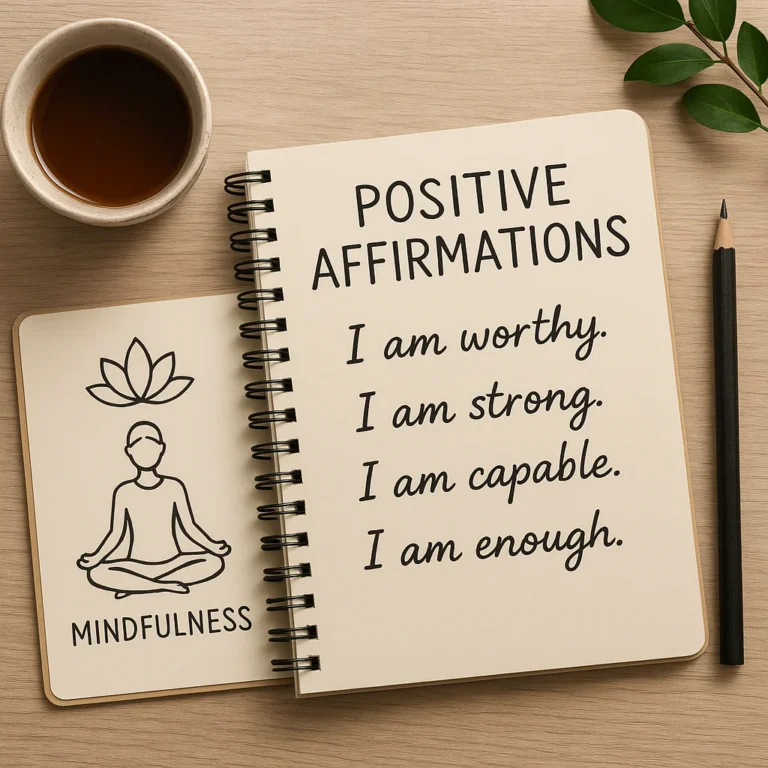
Affirmations are positive statements that help you challenge and overcome self-sabotaging thoughts. Research shows that self-affirmation activates the ventromedial prefrontal cortex, a region associated with self-processing and value.
How to Use Affirmations Effectively
- Be Specific: Instead of “I am happy,” say “I am finding joy in the small moments.”
- Use the Present Tense: “I am” rather than “I will be.”
- Feel the Emotion: Don’t just say the words; feel them.
- Repeat Daily: Consistency is key.
Common Mistakes
- Being Too Vague: “I am successful” is too broad.
- Ignoring Reality: Affirmations should be true and believable.
- Overdoing It: Too many affirmations can feel overwhelming.
The Power of “I Am”
The phrase “I am” is powerful because it defines your identity. When you say “I am peaceful,” you are telling your brain that peace is who you are.
🏆 Conclusion: Your Journey to a Peaceful Mind Starts with a Single Sentence

We started this journey by asking, “Are there any mindful quotes from famous authors or thought leaders on happiness and inner peace?” The answer is a resounding yes. From the ancient wisdom of Marcus Aurelius to the modern insights of Jay Shetty, these quotes offer a roadmap to inner peace.
But here’s the catch: Knowing the quotes is not enough. You must live them. You must spot, stop, and swap your negative thoughts. You must choose joy every day.
The journey to a peaceful mind is not a destination; it’s a daily practice. It starts with a single sentence, a single breath, a single choice.
So, what are you waiting for? Pick a quote, find your anchor, and start your journey today.
🔗 Recommended Links: Books, Courses, and Apps to Deepen Your Practice
Ready to take the next step? Here are some highly recommended resources to deepen your practice.
Books
- Think Like a Monk by Jay Shetty: A comprehensive guide to the 5 Elements of Happiness.
👉 Shop on: Amazon | Barnes & Noble | Official Website - The Power of Now by Eckhart Tolle: A guide to spiritual enlightenment and present-moment awareness.
👉 Shop on: Amazon | Barnes & Noble | Official Website - Meditations by Marcus Aurelius: The timeless wisdom of the Stoic Sage.
👉 Shop on: Amazon | Barnes & Noble | Official Website - Man’s Search for Meaning by Viktor Frankl: A profound exploration of finding meaning in suffering.
👉 Shop on: Amazon | Barnes & Noble | Official Website - The Untethered Soul by Michael A. Singer: A guide to inner freedom and spiritual growth.
👉 Shop on: Amazon | Barnes & Noble | Official Website
Apps
- Headspace: Guided meditations and mindfulness exercises.
👉 Shop on: Headspace Official - Calm: Sleep stories, meditations, and music for relaxation.
👉 Shop on: Calm Official - Insight Timer: A vast library of free meditations and mindfulness tracks.
👉 Shop on: Insight Timer Official
Courses
- Mindful Leadership by Marshall Goldsmith: A course on leadership and inner stillness.
👉 Shop on: Marshall Goldsmith Official - The Science of Well-Being by Yale University (Coursera): A course on the science of happiness.
👉 Shop on: Coursera
❓ FAQ: Common Questions About Mindful Quotes and Happiness

What are the best mindful quotes about happiness from modern authors?
Modern authors like Jay Shetty, Brené Brown, and Eckhart Tolle offer profound insights into happiness. Shetty’s Spot, Stop, Swap technique is particularly effective for managing negative thoughts. Brown emphasizes vulnerability as a path to connection and joy. Tolle focuses on the present moment as the key to inner peace.
Which famous thought leaders have written about finding inner peace?
Many thought leaders have written about inner peace. Marcus Aurelius in Meditations, Thich Nhat Hanh in The Miracle of Mindfulness, and Viktor Frankl in Man’s Search for Meaning are just a few. Dalai Lama also offers extensive teachings on compassion and peace.
Read more about “🌟 50+ Quotes About Being Present in the Moment to Reset Your Mind (2026)”
Can you recommend short mindful quotes for daily inspiration?
Absolutely! Here are a few short and powerful quotes:
- “Peace is every step.” – Thich Nhat Hanh
- “The present moment is all you have.” – Eckhart Tolle
- “You are not your mind.” – Eckhart Tolle
- “Joy is the happiness of love.” – Venerable Fulton J. Shen
- “Make peace with what you do not know.” – Marshall Goldsmith
Read more about “🌿 50+ Short Mindfulness Quotes to Transform Your Day (2026)”
What do spiritual leaders say about achieving happiness through mindfulness?
Spiritual leaders emphasize that happiness is an internal state, not an external condition. Buddha taught that suffering comes from attachment, and peace comes from letting go. Thich Nhat Hanh teaches that mindfulness is the key to inner peace. Pope Francis emphasizes gratitude as a source of joy.
Read more about “🧠 The True Mindful Meaning: 7 Secrets to Mastering Presence (2026)”
How can I use mindful quotes to improve my mental health?
You can use mindful quotes as affirmations to reframe negative thoughts. Write them down, repeat them daily, and use them as a cognitive interrupt when you feel stressed. They can help you regulate emotions, reduce anxiety, and increase resilience.
Read more about “🧠 Why Mindfulness Is Your Brain’s Ultimate Stress Shield (2026)”
What is the difference between joy and happiness?
Happiness is often tied to external circumstances and is fleeting. Joy is an internal state that comes from within and is more enduring. As Venerable Fulton J. Shen said, “Joy is the happiness of love – love aware of its own inner happiness.”
Read more about “🌟 10 Mindful Habits for a Happier, Fulfilled Life (2026)”
How do I choose the right mindful quote for me?
Choose a quote that resonates with you. It should make you feel calm, inspired, or grounded. Try a few different quotes and see which one sticks.
Read more about “🌟 101 Mindful Quotes to Calm Your Chaos (2026)”
Can mindful quotes help with anxiety?
Yes, mindful quotes can help with anxiety by acting as a cognitive interrupt. They help you spot negative thoughts, stop the spiral, and swap them with positive ones. This can reduce anxiety and increase calm.
Read more about “🧠 Can Mindfulness Help with Stress and Anxiety Relief? (2026)”
What is the “Spot, Stop, Swap” technique?
The Spot, Stop, Swap technique, popularized by Jay Shetty, involves spoting a negative thought, stopping the narrative, and swapping it with a positive one. It’s a powerful tool for emotional regulation and mindfulness.
How often should I read mindful quotes?
You should read mindful quotes daily. Consistency is key to rewiring your brain and building resilience. Try to read them at the same time each day, such as in the morning or before bed.
Read more about “🌟 How Mindful Quotes Boost Your Happiness & Well-Being (2026)”
📖 Reference Links: Sources and Further Reading
For those who want to dive deeper, here are some reputable sources and further reading materials.
- Harvard’s List of Emotions: A comprehensive list of emotions to help you diagnose your feelings.
- Harvard Emotional Intelligence
- The Science of Well-Being: A course by Yale University on the science of happiness.
- Coursera: The Science of Well-Being
- Mindful Quotes™: Our own collection of inspirational quotes and mindfulness resources.
- Inspirational Quotes
- Amanda Zurface’s 50 Quotes About Joy: A beautiful collection of Christian quotes on true joy.
- 50 Quotes About Joy to Inspire You – Amanda Zurface
- Jay Shetty’s Think Like a Monk: The official website for Jay Shetty’s book and resources.
- Think Like a Monk
- Eckhart Tolle’s Official Website: Resources on present-moment awareness and spiritual growth.
- Eckhart Tolle
- Marshall Goldsmith’s Official Website: Insights on leadership and inner stillness.
- Marshall Goldsmith
- Thich Nhat Hanh’s Plum Village: A community dedicated to mindfulness and peace.
- Plum Village
- Viktor Frankl’s Viktor Frankl Institute: Resources on logotherapy and finding meaning.
- Viktor Frankl Institute
- Brené Brown’s Official Website: Insights on vulnerability, courage, and shame.
- Brené Brown