Support our educational content for free when you purchase through links on our site. Learn more
15 Quotes on Mindfulness & Imagination to Ignite Your Soul ✨


Have you ever tried to force a creative idea, only to watch it crumble like dry clay? We’ve all been there, staring at a blank page while our inner critic screams, “You have nothing to say!” But what if the secret to unlocking your wildest imagination wasn’t about trying harder, but about being more present? At Mindful Quotes™, we’ve discovered that the most profound creative breakthroughs happen not when we chase inspiration, but when we quiet the noise and listen.
In this deep dive, we’re exploring 15 powerful quotes on mindfulness and imagination that do more than just look good on a sticky note—they rewire your brain for flow, silence self-doubt, and turn “happy little accidents” into masterpieces. From the ancient wisdom of Zen masters to the modern insights of Elizabeth Gilbert and Bob Ross, you’ll discover how mindfulness acts as the fertile soil where creativity blooms. We’ll also reveal the surprising science behind why your brain lights up when you combine meditation with art, and share a specific “5-minute rule” that can instantly dissolve creative blocks.
Ready to stop waiting for inspiration and start creating from a place of presence? Let’s turn those scattered thoughts into a symphony of mindful imagination.
Key Takeaways
- Mindfulness is the Catalyst: Quieting the inner critic through present-moment awareness creates the safe space necessary for wild imagination to flourish.
- Creativity is a Birthright: You don’t need to be an “artist” to be creative; mindful engagement with everyday life is the ultimate creative act.
- The Science of Flow: Combining meditation with artistic practice boosts neuroplasticity, lowers cortisol, and triggers the dopamine rush associated with the flow state.
- Embrace the “Happy Accident”: Shifting your mindset from perfectionism to curiosity transforms mistakes into unexpected creative opportunities.
- Actionable Wisdom: Use the 15 curated quotes as daily mantras to reprogram your subconscious and overcome creative blocks instantly.
Table of Contents
- ⚡️ Quick Tips and Facts
- 📜 The Ancient Roots of Mindful Imagination: A Historical Journey
- 🧠 How Mindfulness Unlocks the Door to Wild Imagination
- 🎨 15 Powerful Quotes on Mindfulness and Imagination to Spark Your Soul
- 🚀 7 Ways Positive Affirmations Boost Creative Confidence
- 🌈 10 Daily Practices to Merge Meditation with Artistic Flow
- 🧘 ♀️ Overcoming Creative Blocks: Mindful Strategies for Self-Doubt
- 🌟 The Science Behind Mindful Creativity and Brain Plasticity
- 🛠️ Tools and Resources to Deepen Your Mindful Creative Practice
- 🔗 Recommended Links for Further Inspiration
- ❓ Frequently Asked Questions About Mindfulness and Creativity
- 📚 Reference Links and Sources
⚡️ Quick Tips and Facts
Welcome to the Mindful Quotes™ headquarters! Before we dive deep into the ocean of mindfulness and imagination, let’s hit the fast-forward button on the essentials. You might think you need a degree in philosophy or a studio full of expensive art supplies to tap into this magic, but spoiler alert: you don’t.
Here is the tea on why this combo is the secret sauce for a happier, more creative you:
- The Brain Power-Up: Engaging in creative acts while being mindful doesn’t just feel good; it physically changes your brain. Studies suggest it can increase neuroplasticity, helping you learn faster and adapt better to stress. 🧠✨
- The “Flow” State: When mindfulness meets imagination, you enter a state of flow. This is where time seems to vanish, and you’re so absorbed in creating that your inner critic goes on a well-deserved vacation.
- It’s Not About Perfection: A common myth is that you must be “good” at art to be creative. False! As Bob Ross famously said, we don’t make mistakes; we have “happy little accidents.” Mindfulness teaches us to accept the process, not just the product.
- The Science of Stress: Research from the American Art Therapy Association indicates that just 45 minutes of creative activity can significantly lower cortisol levels, the body’s primary stress hormone. 📉
- Universal Access: You don’t need to be an artist. Whether you’re doodling on a napkin, writing a haiku, or arranging flowers, mindful creativity is accessible to everyone.
Did you know? The adult coloring book phenomenon wasn’t just a fad; it was a massive societal shift toward mindful engagement. It proved that adults crave the permission to “zone out” and play, just like children.
If you’re wondering how to start without feeling overwhelmed, stick around. We’ll get to the how-to in a bit, but first, let’s explore where this wisdom comes from.
📜 The Ancient Roots of Mindful Imagination: A Historical Journey
You might think “mindfulness” and “imagination” are modern buzzwords, but they are as old as humanity itself. We’ve been weaving these threads together for millennia, long before apps and podcasts existed.
The Shamanic Roots
Long before we had “creative blocks,” our ancestors had shamans. These were the original mindful creatives. They used rhythm, dance, storytelling, and visual art to enter trance states (a form of deep mindfulness) to imagine solutions to community problems or heal the sick. They understood that imagination was a bridge to the spiritual and the practical.
Eastern Philosophies: The Art of Presence
In the East, the connection between mindfulness (often rooted in Buddhism and Taoism) and creative expression was seamless.
- Zen Buddhism: The concept of Shoshin or “Beginer’s Mind” is pure gold for creatives. It means approaching every moment with an open, eager, and non-judgmental attitude, exactly like a child. This is the bedrock of mindful imagination.
- Calligraphy and Ink Painting: In traditions like Japanese Shodo, the act of painting is a moving meditation. One breath, one stroke. If your mind wanders, the ink bleds. It forces you to be present to create beauty.
The Western Renaissance: Genius and Meditation
Even in the West, the giants stood on this foundation. Leonardo da Vinci didn’t just paint; he observed. His notebooks are filled with sketches of water, birds, and anatomy, born from a mindful observation of the world. He imagined the future of flight by watching birds, a perfect marriage of mindful attention and wild imagination.
Fun Fact: The word “imagination” comes from the Latin imaginari, meaning “to form a mental image.” It was historically seen as a divine gift, a way to access truths that logic alone couldn’t reach.
We often separate “spiritual practice” from “creative work,” but history tells us they are two sides of the same coin. But how do we actually access this in our chaotic modern lives? Let’s unlock that door.
🧠 How Mindfulness Unlocks the Door to Wild Imagination
Have you ever tried to force an idea? It’s like trying to catch a butterfly with a net made of concrete. The harder you squeeze, the more it crushes. Mindfulness is the art of opening your hand.
The Myth of the “Empty Mind”
Many people think mindfulness means clearing your mind of all thoughts. Wrong! If you try to stop your imagination, you kill it. Mindfulness is about observing your thoughts without judgment. It’s about creating a safe space where your imagination can run wild without the inner critic saying, “That’s stupid,” or “That won’t work.”
The Mechanism: Quieting the Monkey Mind
Your brain has a default mode network (DMN) that often chatters away with worries about the past or future. This is the “monkey mind.”
- Without Mindfulness: The monkey screams, “You’re not good enough!” and your imagination shuts down.
- With Mindfulness: You notice the monkey screaming, say, “Thanks for the input, but I’m busy creating,” and return to the present. This silence is where imagination thrives.
The “Flow” State Connection
When you are fully present, you enter a state of flow. In this state:
- Time Distortion: Hours feel like minutes.
- Loss of Self-Consciousness: You stop worrying about how you look or sound.
- Intrinsic Reward: The act of creating is the reward.
This is the sweet spot where mindfulness and imagination dance together. It’s not about trying to be creative; it’s about being creative.
Wait, but what if I have no ideas?
That’s the beauty of it. Mindfulness teaches you to trust the process. You don’t need to force the idea; you just need to show up. The ideas will come when the soil is ready. We’ll talk about specific exercises to get those seeds sprouting in the next section.
🎨 15 Powerful Quotes on Mindfulness and Imagination to Spark Your Soul
At Mindful Quotes™, we don’t just collect quotes; we curate fuel for your soul. We’ve scoured history, literature, and the wisdom of modern creatives to bring you 15 gems that perfectly blend mindfulness and imagination.
These aren’t just pretty words; they are mantras to rewire your brain for creativity.
The Classics: Wisdom from the Masters
- “Creativity is intelligence having fun.” – Albert Einstein
The Insight: Stop taking yourself so seriously! Mindfulness invites you to play. When you relax, your intelligence becomes playful, and that’s where the magic happens. - “The worst enemy to creativity is self-doubt.” – Sylvia Plath
The Insight: Self-doubt is the ultimate mindfulness blocker. It pulls you out of the present and into a future of “what ifs.” Silence the doubt, and the imagination flows. - “If you’re alive, you’re a creative person.” – Elizabeth Gilbert
The Insight: You don’t need a degree. You don’t need talent. You just need to be present in your life. Creativity is a birthright, not a skill you earn. - “Every artist was first an amateur.” – Ralph Waldo Emerson
The Insight: Embrace the beginer’s mind. Mindfulness teaches us that every moment is new. Don’t let the fear of being a “bad” artist stop you from starting. - “You don’t make mistakes, just happy little accidents.” – Bob Ross
The Insight: This is the ultimate mindful acceptance. When you stop judging your output, you open the door to unexpected, beautiful discoveries.
The Deep Dives: Soul and Courage
- “Mystery is at the heart of creativity. That, and surprise.” – Julia Cameron
The Insight: Mindfulness is about being open to the unknown. If you try to control every outcome, you kill the mystery. Let the surprise in! - “Creativity takes courage.” – Henri Matise
The Insight: It takes bravery to be vulnerable and present. Mindfulness gives you the courage to face the blank page (or canvas) without fear. - “The desire to create is one of the deepest yearnings of the human soul.” – Dieter F. Uchtdorf
The Insight: This isn’t just a hobby; it’s a spiritual need. Ignoring it is like ignoring hunger. Mindfulness helps you listen to that deep yearning. - “You are never too old to set another goal or to dream a new dream.” – C.S. Lewis
The Insight: The past is gone; the future isn’t here. Mindfulness anchors you in the now, where new dreams are born. - “Creativity is not the finding of a thing, but the making something out of it after it is found.” – James Russell Lowell
The Insight: It’s not about the perfect idea; it’s about the process of transformation. Mindfulness keeps you engaged in the “making.”
The Modern Voices: Healing and Connection
- “Art enables us to find ourselves and lose ourselves at the same time.” – Thomas Merton
The Insight: The paradox of mindful creativity. You lose your ego (self) but find your true self in the process. - “There is NO SUCH THING as a mindless doodle.” – Suni Brown
The Insight: Even your “wasted” moments are part of your cognitive process. Mindfulness validates every mark you make. - “Art washes away from the soul the dust of everyday life.” – Pablo Picasso
The Insight: Creativity is a cleansing ritual. It clears the mental clutter, allowing imagination to breathe. - “I know but one freedom and that is the freedom of the mind.” – Antoine de Saint-Exupéry
The Insight: True freedom comes from a mindful mind that isn’t trapped by external circumstances. - “The universe buries strange jewels deep within us all, and then stands back to see if we can find them.” – Elizabeth Gilbert
The Insight: Your imagination is the map. Mindfulness is the compass. Together, they lead you to your hidden gems.
Pro Tip: Don’t just read these. Write them down. Put them on sticky notes, set them as your phone wallpaper, or say them aloud before you start your creative session.
🚀 7 Ways Positive Affirmations Boost Creative Confidence
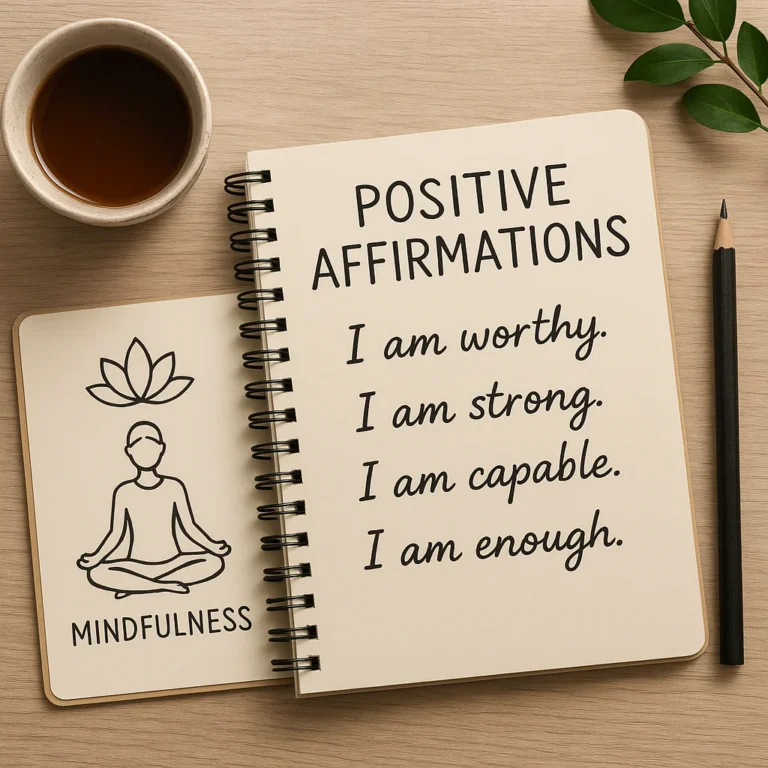
Quotes are great, but affirmations are active. They are the “I am” statements that reprogram your subconscious. When you combine mindfulness with positive affirmations, you create a powerful feedback loop that boosts creative confidence.
Here are 7 ways to use them effectively:
- The “I Am” Statement: Instead of “I hope I can create,” say “I am a creative person.” Mindfulness helps you feel the truth of this statement in the present moment.
- Reframing Failure: When you make a mistake, say: “This is a happy accident, and I am learning.” This shifts your mindset from fear to curiosity.
- Silencing the Critic: When the inner voice says “You’re not good enough,” counter with: “My voice matters, and my ideas are valid.“
- Embracing the Process: “I enjoy the journey of creation, not just the destination.” This keeps you mindful of the present moment.
- Trusting the Flow: “I trust my intuition to guide me.” This releases the need for control and opens the door to imagination.
- Celebrating Small Wins: “I am proud of every step I take.” Mindfulness helps you notice and appreciate the tiny victories.
- Connecting to the Soul: “My creativity is a reflection of my soul’s joy.” This deepens the spiritual connection to your work.
How to Practice
- Morning Ritual: Spend 5 minutes in silence, breathing deeply, and repeating your affirmations.
- During Blocks: When you feel stuck, pause, take three deep breaths, and say your affirmation aloud.
- Evening Reflection: Before bed, review your day and affirm: “I am grateful for the creativity I expressed today.“
Why does this work? Neuroplasticity! Repeating positive statements rewires your brain to believe in your creative potential. It’s like building a muscle.
🌈 10 Daily Practices to Merge Meditation with Artistic Flow
Ready to get your hands dirty? Here are 10 practical ways to blend mindfulness and imagination into your daily routine. No fancy equipment needed—just you and your creativity.
1. The Mindful Doodle
- How: Sit with a pen and paper. Close your eyes, take three deep breaths, and then start drawing without lifting your pen. Don’t plan; just let your hand move.
- Why: This bypasses the logical brain and taps into pure imagination.
2. The Gratitude Walk
- How: Go for a walk. Focus on your breath. As you walk, look for three things that inspire you (a color, a shape, a texture). Imagine a story for each.
- Why: Combines mindful movement with creative observation.
3. The “Five Senses” Sketch
- How: Sit quietly. Focus one sense (e.g., hearing). Listen for 2 minutes. Then, draw or write what you heard.
- Why: Deepens sensory awareness and translates it into art.
4. The Breath-Color Meditation
- How: Close your eyes. Visualize a color with each inhale. Exhale and imagine that color spreading through your body. Then, paint that color.
- Why: Connects breathwork with visual imagination.
5. The “Happy Accident” Journal
- How: Start a journal where you intentionally make a “mistake” (e.g., spill ink, draw a croked line). Then, create something beautiful from it.
- Why: Practices mindful acceptance and creative problem-solving.
6. The Nature Mandala
- How: Go outside. Collect leaves, stones, or flowers. Arrange them in a circle (mandala) without a plan. Take a photo, then dismantle it.
- Why: Teaches impermanence and the joy of the process.
7. The Silent Story
- How: Listen to a piece of music. Close your eyes. Let a story unfold in your mind. Write it down without editing.
- Why: Enhances auditory imagination and flow state.
8. The Body Scan Creation
- How: Do a body scan meditation. Notice where you feel tension. Create a shape or color that represents that tension, then transform it into something light.
- Why: Uses mindfulness to release physical and creative blocks.
9. The “What If” Game
- How: Sit quietly. Ask yourself, “What if gravity didn’t exist?” or “What if clouds were made of cotton candy?” Let your mind run wild for 5 minutes.
- Why: Exercises divergent thinking and imaginative freedom.
10. The Evening Reflection
- How: Before bed, review your day. What moment made you feel most alive? Write or draw it.
- Why: Reinforces mindful awareness of creative joy.
Curious about which practice works best for you? Try one a day for a week and see which one makes you feel most alive. You might be surprised!
🧘 ♀️ Overcoming Creative Blocks: Mindful Strategies for Self-Doubt
We’ve all been there. The blank page stares back, and the voice in your head whispers, “You have nothing to say.” This is the creative block, and it’s usually fueled by self-doubt.
The Anatomy of a Block
A creative block isn’t a lack of ideas; it’s a fear of judgment. It’s the mind’s way of protecting you from failure. But here’s the truth: Failure is part of the process.
Mindful Strategies to Break Through
1. Acknowledge the Fear
Don’t fight the block. Say, “I notice I’m feeling afraid right now.” Mindfulness is about observing, not fighting. Once you acknowledge the fear, it loses its power.
2. The “Bad Art” Exercise
Give yourself permission to make the worst art possible. Draw a stick figure with three legs. Write a terrible poem. By lowering the stakes, you free your imagination.
3. Change Your Environment
Sometimes, a change of scenery can shift your mindset. Go to a park, a coffee shop, or even a different room. Mindful awareness of new surroundings can spark new ideas.
4. The “5-Minute Rule”
Tell yourself, “I’ll just do this for 5 minutes.” Often, the hardest part is starting. Once you begin, the flow takes over.
5. Connect with Your Inner Child
Ask yourself, “What would I do if I were 5 years old?” Children don’t worry about judgment. They just play. Reconnect with that innocent imagination.
Remember: Even the greatest artists have blocks. The difference is they don’t let the block stop them. They use mindfulness to navigate through it.
🌟 The Science Behind Mindful Creativity and Brain Plasticity
You might be wondering, “Is this just woo-woo, or is there actual science?” Spoiler: There’s plenty of science!
Neuroplasticity: The Brain’s Superpower
Neuroplasticity is the brain’s ability to reorganize itself by forming new neural connections. When you engage in mindful creativity, you are literally building new pathways in your brain.
- Left Brain (Logic): Analyzes, plans, and judges.
- Right Brain (Creativity): Imagines, feels, and creates.
- Mindfulness: Bridges the gap, allowing both hemispheres to work together.
The Dopamine Rush
Creative activities release dopamine, the “feel-good” neurotransmitter. This not only makes you happy but also enhances learning and memory.
Stress Reduction
Studies show that mindful creativity lowers cortisol levels. Lower stress means a clearer mind, which leads to better imagination.
The “Default Mode Network” (DMN)
When you are not focused on a task, your DMN is active. This is where daydreaming and imagination happen. Mindfulness helps you access the DMN intentionally, turning daydreams into creative insights.
Did you know? A study published in the Journal of Positive Psychology found that people who engaged in creative activities for just 30 minutes a day reported higher levels of well-being and lower stress.
🛠️ Tools and Resources to Deepen Your Mindful Creative Practice
You don’t need a studio full of supplies to start, but having the right tools can enhance your experience. Here are some of our favorite mindful creativity tools and resources.
Essential Supplies
- Journals: A high-quality journal like the Moleskine or Leuchtturm1917 can make the act of writing feel special.
- Art Supplies: Prismacolor pencils, Faber-Castell markers, or even a simple Crayola set. The brand matters less than the joy of using them.
- Meditation Apps: Headspace or Calm offer guided meditations specifically for creativity and focus.
Books to Inspire
- “The Artist’s Way” by Julia Cameron: A classic guide to unlocking creativity through “morning pages” and artist dates.
- “Big Magic” by Elizabeth Gilbert: A refreshing take on living a creative life without fear.
- “The War of Art” by Steven Pressfield: A no-nonsense guide to overcoming resistance.
Online Resources
- Mindful Quotes™: Check out our Inspirational Quotes for daily inspiration.
- Specific Guide: For a deeper dive into this exact topic, read our Mindfulness and Creativity Quotes article.
Featured Video: A Visual Journey
For a visual exploration of these concepts, check out this inspiring video featuring quotes from spiritual leaders and philosophers. It dives deep into the fredom of the mind and the healing power of presence.
🎥 Watch: Mindfulness Quotes: Conquering Anxiety and Finding Inner Peace
Featuring insights from the Dalai Lama, Buddha, and Swami Sivanda on the dual nature of the mind and the importance of living in the moment.
Pro Tip: Don’t just consume these resources; interact with them. Journal about what you read, try the exercises, and share your insights with others.
🔗 Recommended Links for Further Inspiration
Ready to take the next step? Here are some curated links to help you on your mindful creativity journey.
- Books on Amazon:
- The Artist’s Way: A Spiritual Path to Higher Creativity
- Big Magic: Creative Living Beyond Fear
- The War of Art: Break Through the Blocks and Win Your Inner Creative Battles
- Art Supplies:
- Moleskine Journals
- Prismacolor Pencils
- Meditation Apps:
- Headspace
- Calm
❓ Frequently Asked Questions About Mindfulness and Creativity
How do famous thinkers and authors view the relationship between mindfulness and imagination, as reflected in their quotes?
Famous thinkers like Albert Einstein and Julia Cameron view mindfulness as the foundation for imagination. Einstein called creativity “intelligence having fun,” implying that a relaxed, present mind is where genius lives. Cameron emphasizes that mystery and surprise are at the heart of creativity, which can only be accessed through a mindful openness to the unknown.
What are the best quotes to use as daily reminders to practice mindfulness and nurture my imagination?
Some of the best quotes include:
- “Creativity is intelligence having fun.” – Albert Einstein
- “The worst enemy to creativity is self-doubt.” – Sylvia Plath
- “If you’re alive, you’re a creative person.” – Elizabeth Gilbert
- “You don’t make mistakes, just happy little accidents.” – Bob Ross
These quotes serve as mantras to silence the inner critic and invite playfulness.
Where can I find quotes that highlight the connection between mindfulness, imagination, and creativity?
You can find these quotes in books like “The Artist’s Way” by Julia Cameron, “Big Magic” by Elizabeth Gilbert, and on our own Mindful Quotes™ website. Additionally, resources like Tiny Buddha and Isabella Strambio’s blog offer curated lists of inspiring quotes.
How can quotes on mindfulness and imagination help cultivate a more creative and present life?
Quotes act as anchors in the present moment. When you read a quote like “Creativity takes courage,” it reminds you to be brave right now. They reframe your mindset, shifting you from fear to curiosity, and from judgment to acceptance.
What are some inspiring quotes that combine mindfulness and imagination?
- “Art enables us to find ourselves and lose ourselves at the same time.” – Thomas Merton
- “There is NO SUCH THING as a mindless doodle.” – Suni Brown
- “The universe buries strange jewels deep within us all, and then stands back to see if we can find them.” – Elizabeth Gilbert
How can I use quotes on mindfulness and imagination to improve my daily life?
- Morning Ritual: Read a quote before starting your day.
- Sticky Notes: Place quotes on your mirror or desk.
- Journaling: Write a quote and reflect on how it applies to your current situation.
- Affirmations: Turn quotes into “I am” statements.
What are some famous quotes that combine mindfulness and imagination?
- “Creativity is intelligence having fun.” – Albert Einstein
- “Mystery is at the heart of creativity. That, and surprise.” – Julia Cameron
- “You are never too old to set another goal or to dream a new dream.” – C.S. Lewis
Are there any mindfulness exercises to help boost imagination?
Yes! Try the Mindful Doodle, the Five Senses Sketch, or the “What If” Game. These exercises combine present-moment awareness with creative exploration.
How can mindfulness enhance creativity and imagination?
Mindfulness quiets the inner critic, allowing imagination to flow freely. It helps you stay in the present moment, where new ideas are born, and reduces the fear of failure that often blocks creativity.
What is the relationship between mindfulness and imagination?
Mindfulness is the soil, and imagination is the seed. Without the present-moment awareness of mindfulness, the seed of imagination cannot grow. Mindfulness creates the safe, non-judgmental space where imagination can flourish.
What are the best quotes about mindfulness and imagination?
- “Creativity is intelligence having fun.” – Albert Einstein
- “The worst enemy to creativity is self-doubt.” – Sylvia Plath
- “If you’re alive, you’re a creative person.” – Elizabeth Gilbert
- “You don’t make mistakes, just happy little accidents.” – Bob Ross
How does imagination enhance mindfulness practice?
Imagination adds depth and richness to mindfulness. Instead of just observing the present, you can imagine possibilities, stories, and connections. This makes the practice more engaging and helps you stay present longer.
Who are famous authors that write about mindfulness and creativity?
- Julia Cameron (The Artist’s Way)
- Elizabeth Gilbert (Big Magic)
- Steven Pressfield (The War of Art)
- Pablo Picasso (Artist and thinker)
- Thomas Merton (Writer and mystic)
Can mindfulness improve your imaginative thinking?
Absolutely! By reducing stress and quieting the inner critic, mindfulness creates the mental space needed for imaginative thinking to thrive. It allows you to see the world with fresh eyes and make unique connections.
📚 Reference Links and Sources
- American Art Therapy Association: Art Therapy and Mental Health
- Tiny Buddha: How Creativity Leads to Mindfulness, Happiness, and Peace
- Isabella Strambio: 10 Inspirational Quotes to Awaken Your Creativity
- Kimberly Hetherington: Quotes on Art and Healing
- National Center for Biotechnology Information (NCBI): Art Therapy Research
- Mindful Quotes™: Inspirational Quotes
- Mindful Quotes™: Mindfulness and Creativity Quotes