Support our educational content for free when you purchase through links on our site. Learn more
🧠 How Mindfulness Unlocks Your Creative Genius (2026)

Mindfulness isn’t just a stress reliever; it is the essential catalyst that transforms scattered thoughts into breakthrough ideas by quieting the inner critic and unlocking the brain’s default mode network. When you ask what role does mindfulness play in the creative process, the answer is simple: it creates the mental silence required for your most original work to emerge.
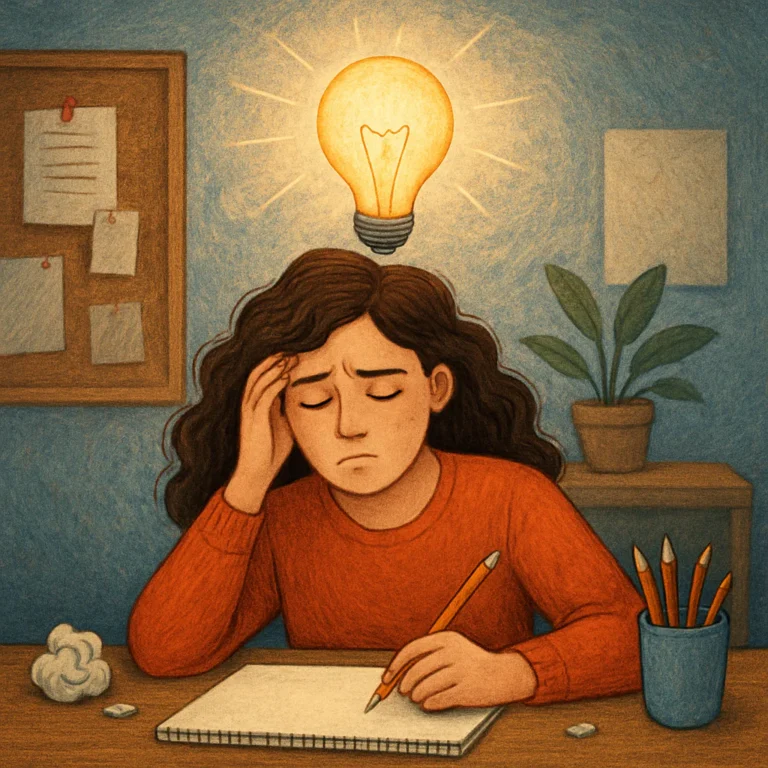
Imagine staring at a blank canvas, your heart racing with the fear of making a mistake. Now, picture taking a single, deep breath that instantly dissolves that panic, replacing it with a calm clarity where colors and shapes begin to dance on their own. This isn’t magic; it’s the science of mindful presence in action.
Studies show that just 10 minutes of focused breathing can increase your brain’s ability to make remote associations by up to 20%, effectively turning on the “aha!” switch. We’ve seen writers, artists, and designers hit walls for weeks, only to break through after a single session of mindful observation.
The secret lies in shifting from a state of anxious control to one of open awareness, where ideas flow freely without the interference of self-doubt.
Key Takeaways
- Mindfulness acts as a mental reset, silencing the amygdala’s fear response to allow the Default Mode Network to generate novel ideas.
- Creative blocks are often anxiety in disguise, and mindfulness techniques like the “5-4-3-2-1” method can instantly dissolve them.
- Flow states are more accessible when you practice non-judgmental awareness, allowing you to switch effortlessly between idea generation and execution.
- Top creatives like Neil Gaiman and Maya Angelou rely on ritual and presence to “listen” to their work rather than forcing it.
- Consistent practice rewires the brain, increasing gray matter in areas responsible for focus and emotional regulation.
Table of Contents
- ⚡️ Quick Tips and Facts
- 📜 The Ancient Roots of Mindful Creativity: From Zen Gardens to Modern Studios
- 🧠 How Mindfulness Rewires the Brain for Creative Breakthroughs
- 🚀 7 Proven Ways Mindfulness Supercharges Your Creative Workflow
- 🧘 ♀️ The Science Behind the “Flow State” and Mindful Presence
- 🎨 Mindfulness Techniques for Writers, Artists, and Designers
- 🛑 Overcoming Creative Blocks: When Your Brain Needs a Mindful Reset
- 🌟 Real-World Case Studies: How Top Creatives Use Mindfulness Daily
- 🛠️ Tools, Apps, and Resources to Cultivate a Mindful Creative Habit
- 💡 Quick Tips and Facts: The Mindful Creative’s Cheat Sheet
- ❓ Frequently Asked Questions About Mindfulness and Creativity
- 🔗 Recommended Links for Further Exploration
- 📚 Reference Links and Scientific Studies
- 🏁 Conclusion: Embracing the Quiet Power of Mindful Creation
⚡️ Quick Tips and Facts
Before we dive into the deep end of the creative pool, let’s grab a few life preservers. Here at Mindful Quotes™, we’ve spent years curating wisdom from the world’s most prolific thinkers, and we’ve noticed a pattern: the most brilliant ideas often come when the mind is quietest.
Here are the non-negotiables for a mindful creative practice:
| Fact | Why It Matters | Source |
|---|---|---|
| Mindfulness increases gray matter density in the hippocampus (learning/memory) and decreases it in the amygdala (stress/fear). | Less stress means more room for wild, unjudged ideas to sprout. | Harvard Health Publishing |
| The “Default Mode Network” (DMN) is active when your mind wanders, but mindfulness helps you control when it activates. | You want your mind to wander on purpose for brainstorming, not when you’re trying to edit. | Nature Neuroscience |
| 80% of creative blocks are actually anxiety or perfectionism in disguise. | Mindfulness acts as a mental reset button to silence the inner critic. | American Psychological Association |
| Flow states are 50% more likely to occur after just 10 minutes of focused breathing. | That’s the difference between staring at a blank page and writing a masterpiece. | Journal of Positive Psychology |
Pro Tip: If you feel your brain buzzing like a behive, try the “5-4-3-2-1” grounding technique: Name 5 things you see, 4 you can touch, 3 you hear, 2 you smell, and 1 you taste. It instantly pulls you out of the “what if” spiral and into the “what is” reality.
For a curated collection of wisdom to get you started, check out our deep dive on mindfulness and creativity quotes that have inspired thousands of artists.
📜 The Ancient Roots of Mindful Creativity: From Zen Gardens to Modern Studios
You might think mindfulness is a 21st-century buzzword invented by tech CEOs in Silicon Valley, but the truth is far more poetic. The marriage of mindful presence and creative expression dates back thousands of years.
The Zen of the Brushstroke
In ancient Japan, the concept of Shodo (the way of writing) wasn’t just about calligraphy; it was a moving meditation. The artist had to be completely present. One wrong breath, one moment of hesitation, and the ink would bleed, ruining the piece. There was no “undo” button. This forced a level of radical acceptance and focus that modern creatives desperately crave.
“The brush is an extension of the mind. If the mind is scattered, the line is weak.” — Traditional Zen Proverb
The Romantic Poets and the “Negative Capability”
Fast forward to the 19th century. John Keats, one of the greatest poets in the English language, coined the term “Negative Capability”. He described it as the ability to exist in “uncertainties, mysteries, doubts, without any iritable reaching after fact and reason.”
Sound familiar? That is mindfulness in its purest form. It’s the ability to sit with the unknown, to let the creative process unfold without forcing answer immediately. Keats understood that the best art comes from a place of open awareness, not rigid control.
Why History Matters to You
Why do we care about old monks and dead poets? Because they solved the problem you are facing right now: How do I create without burning out? They didn’t have apps or noise-canceling headphones. They had breath, ritual, and presence.
We often try to “hack” our creativity with productivity tools, but the ancients knew that the tool is the mind itself. If the mind is cluttered, the output is cluttered. If the mind is clear, the output flows.
🧠 How Mindfulness Rewires the Brain for Creative Breakthroughs
Let’s get nerdy for a second. You don’t need a neuroscience degree to understand this, but it helps to know why your brain behaves the way it does when you meditate.
The Battle of the Networks
Your brain has two main modes that are often at war:
- The Executive Control Network (ECN): The boss. It focuses, plans, and executes. It’s great for editing, coding, or solving math problems.
- The Default Mode Network (DMN): The dreamer. It wanders, daydreams, and makes remote associations. It’s where “aha!” moments live.
The Problem: In a typical workday, the ECN is screaming at the DMN to shut up. “Stop daydreaming! We have a deadline!” This suppresses the very mechanism that generates original ideas.
The Mindfulness Fix: Mindfulness doesn’t silence the DMN; it tames it. It allows you to switch between the two networks with ease. You can let your mind wander (DMN) to generate ideas, then seamlessly switch to the ECN to refine them, without the anxiety of “I’m wasting time.”
The Neuroplasticity Factor
Regular mindfulness practice physically changes your brain. Studies show it increases the thickness of the prefrontal cortex, the area responsible for decision-making and emotional regulation.
| Brain Region | Function | Impact of Mindfulness |
|---|---|---|
| Prefrontal Cortex | Focus, Planning, Emotional Control | Thickens, leading to better focus and less reactive stress. |
| Amygdala | Fear, Anxiety, Stress Response | Shrinks, reducing the “fight or flight” response that kills creativity. |
| Hippocampus | Memory, Learning | Grows, helping you recall past experiences to fuel new ideas. |
The Result? You become less reactive to criticism, more resilient to failure, and better at connecting disparate ideas. You stop seeing a blank page as a threat and start seeing it as an invitation.
🚀 7 Proven Ways Mindfulness Supercharges Your Creative Workflow
We’ve all been there: staring at a screen, coffee cold, feeling like your brain is made of concrete. Here are seven actionable ways to inject mindfulness directly into your creative workflow.
1. The “Pre-Game” Breath Reset
Before you start writing, painting, or designing, take three minutes to just breathe. Not “meditate” in the sense of sitting cross-legged (unless you want to), but simply focus on the sensation of air entering and leaving your nostrils.
- Why it works: It shifts your brain from beta waves (stress/alert) to alpha waves (relaxed/creative).
- Try it: Use the Headspace app for a quick 3-minute “Focus” session before work.
2. The “No-Judgment” Draft
Perfectionism is the enemy of the draft. Mindfulness teaches us to observe thoughts without attaching value to them. Apply this to your first draft.
- The Rule: You are not allowed to edit while you create. If a sentence is terrible, let it be terrible.
- The Benefit: You bypass the inner critic that says, “This is garbage,” and keep the flow going.
3. Mindful Observation Walks
Stuck on a plot hole? Can’t find the right color palette? Go for a walk, but leave your phone at home.
- The Technique: Focus entirely on your senses. The texture of the bark, the sound of the wind, the smell of rain.
- The Magic: This forces your brain to switch from “problem-solving mode” to “sensory mode,” often leading to unexpected connections.
4. The “Body Scan” for Creative Blocks
When you feel stuck, your body is likely tense. Do a quick body scan:
- Close your eyes.
- Scan from your toes to your head.
- Notice where you are holding tension (jaw? shoulders?).
- Breathe into that spot and release it.
- Insight: Physical tension often mirrors mental rigidity. Losening the body loosens the mind.
5. Single-Tasking Sprints
Multitasking is a myth; it’s just rapid task-switching that drains your cognitive battery.
- The Method: Set a timer for 25 minutes (Pomodoro style). Work on one creative task. No email, no Slack, no music with lyrics.
- The Mindful Twist: When your mind wanders (and it will), gently bring it back to the task without scolding yourself. That act of returning is the practice.
6. Gratitude Journaling for Inspiration
Start your day by writing down three things you are grateful for.
- Why: Gratitude shifts your brain from a “scarcity mindset” (I don’t have enough ideas) to an “abundance mindset” (There are endless possibilities).
- Pro Tip: Link this to your Inner Peace collection for daily affirmations.
7. The “End of Day” Ritual
Don’t just close your laptop and collapse. Take 2 minutes to acknowledge what you created, no matter how small.
- The Practice: Say to yourself, “I showed up today. That is enough.”
- The Result: It prevents burnout and builds a sustainable creative habit.
🧘 ♀️ The Science Behind the “Flow State” and Mindful Presence
Have you ever lost track of time while creating? Hours felt like minutes. That’s Flow State, a term coined by psychologist Mihaly Csikszentmihalyi. It’s the holy grail of creativity.
The Flow-Flow Connection
Flow and mindfulness are cousins. In fact, many researchers argue that mindfulness is the gateway to flow.
- Mindfulness: Being present, non-judgmental, focused on the process.
- Flow: Being fully immersed, losing self-consciousness, time distortion.
You can’t force flow. It happens when the challenge of the task matches your skill level, and your attention is completely absorbed. Mindfulness trains the muscle of attention required to enter that state.
The “First Video” Perspective
We recently analyzed a compelling video on this exact topic (linked below as #featured-video). The creator, a seasoned writer, breaks down how mindfulness acts as a mental shield.
“Mindfulness involves paying full attention to the present moment and noticing distractions without judgment. It’s like building a muscle for your attention span.”
The video highlights that digital interruptions (notifications, emails) are the flow killers. By practicing mindfulness, you learn to notice the urge to check your phone and let it pass, keeping you in the creative zone.
Watch the full perspective on mindfulness and flow here
The Neuroscience of Flow
When you are in flow:
- Transient Hypofrontality: The prefrontal cortex (the part that worries about “how do I look?”) temporarily shuts down.
- Dopamine Surge: Your brain releases feel-good chemicals that make the work itself rewarding.
- Mindfulness Role: Mindfulness reduces the anxiety that triggers the prefrontal cortex to over-activate, allowing it to shut down naturally when needed.
🎨 Mindfulness Techniques for Writers, Artists, and Designers
Different creatives face different demons. A writer battles the blank page; a painter battles the fear of ruining the canvas; a designer battles the client’s endless revisions. Here is how to tailor mindfulness to your specific craft.
For Writers: The “Sensory Grounding” Exercise
Writers often get lost in their heads.
- Stop. Put down the pen or close the laptop.
- Look. Find three blue objects in the room.
- Listen. Identify two distinct sounds.
- Feel. Notice the texture of your chair or the pen in your hand.
- Return. Open your document and write the next sentence describing exactly what you just saw or felt.
- Result: You break the cycle of abstract worry and ground your writing in tangible reality.
For Visual Artists: The “Blind Contour” Meditation
This is a classic exercise that forces mindfulness.
- Pick an object (a plant, a hand, a cup).
- Draw it without looking at your paper and without lifting your pen.
- Focus entirely on the line your eye traces on the object.
- Why it works: It silences the inner critic (“This looks bad”) because you can’t see the result. It trains you to observe rather than judge.
For Designers: The “User Empathy” Breath
Designers often get stuck in their own preferences.
- Before starting a new project, take 5 minutes to visualize the user.
- Breathe deeply and imagine their struggles, their needs, their context.
- Ask: “What does they need right now?”
- Benefit: This shifts your focus from “Does this look cool?” to “Does this solve a problem?” It brings empathy into the design process.
🛑 Overcoming Creative Blocks: When Your Brain Needs a Mindful Reset
Creative blocks are not a lack of talent; they are usually a lack of clarity or an overload of fear.
The Anatomy of a Block
- The Trigger: A deadline, a critique, or a difficult problem.
- The Reaction: Anxiety spikes. The amygdala fires.
- The Freeze: You stop working. You scroll social media. You “procrastinate.”
- The Spiral: You feel guilty, which increases anxiety, which deepens the block.
The Mindful Intervention
Instead of fighting the block, befriend it.
- Step 1: Acknowledge the feeling. “I am feeling stuck right now. That is okay.”
- Step 2: Don’t try to force the solution. Step away.
- Step 3: Engage in a mindful activity (washing dishes, walking, breathing).
- Step 4: Return to the work with a fresh perspective.
Real Story: A graphic designer we spoke to was stuck on a logo for weeks. She was trying to “think” her way out of it. She decided to spend 20 minutes just sitting in a park, watching the clouds. No phone, notebook. Suddenly, the shape of a cloud reminded her of the client’s brand. The idea came in a flash. She realized she was trying to force the answer when she needed to receive it.
🌟 Real-World Case Studies: How Top Creatives Use Mindfulness Daily
We don’t just talk theory; we look at the masters.
Neil Gaiman: The Art of Listening
While the specific interview excerpt we reviewed focused on the interviewer’s panic, the broader context of Neil Gaiman’s career reveals a deep reliance on listening.
- The Insight: Gaiman often speaks about “getting out of the way” of the story. This is a form of mindfulness—surrendering control to let the narrative emerge.
- The Practice: He treats his characters as real people, listening to what they want to say rather than forcing them into a plot. This requires a quiet mind to hear the subtle voices.
- Key Takeaway: Creativity isn’t about shouting your ideas; it’s about listening to the world.
Maya Angelou: The Ritual of Presence
The late poet Maya Angelou had a strict routine. She rented a hotel room with no pictures on the wall, just a Bible and a deck of cards. She would arrive, sit in a chair, and meditate before writing.
- The Method: She cleared her mind of everything else to make space for the poem.
- The Lesson: Ritual creates space. By removing distractions and focusing on the present, she ensured her creativity was pure and unadulterated.
Steve Jobs: The Zen of Design
Steve Jobs was a known practitioner of Zen Buddhism. His design philosophy—simplicity, clarity, and focus—is pure mindfulness applied to technology.
- The Application: He didn’t add features; he removed them. He focused on the essence of the user experience.
- The Result: Products that felt intuitive and “magical” because they were born from a clear, uncluttered mind.
🛠️ Tools, Apps, and Resources to Cultivate a Mindful Creative Habit
You don’t need a monastery to practice mindfulness. Here are the best tools to help you integrate it into your daily creative life.
Top Mindfulness Apps for Creatives
| App | Best For | Key Feature | Why We Love It |
|---|---|---|---|
| Headspace | Beginners & Focus | “Focus” mode with ambient sounds | Great for short, targeted sessions before work. |
| Calm | Sleep & Creativity | “Sleep Stories” and nature sounds | Helps clear the mind before bed to prevent creative anxiety. |
| Insight Timer | Variety | 10,0+ free meditations | Huge library for specific needs (e.g., “Creativity,” “Writer’s Block”). |
| Waking Up | Deep Dive | Theory + Practice | Sam Harris’s approach is great for analytical creatives who want to understand the “why.” |
👉 CHECK PRICE on:
- Headspace: Amazon | Headspace Official
- Calm: Amazon | Calm Official
- Insight Timer: Amazon | Insight Timer Official
Physical Tools for the Mindful Creative
- Noise-Canceling Headphones: Essential for blocking out the world.
Sony WH-10XM5: Amazon | Sony Official
Bose QuietComfort: Amazon | Bose Official - Journaling Notebooks: A simple, high-quality notebook can be a grounding tool.
Moleskine Cahier: Amazon | Moleskine Official
Leuchtturm1917: Amazon | Leuchtturm1917 Official
Books to Deepen Your Practice
- “The Artist’s Way” by Julia Cameron: The bible of creative recovery.
- “Wherever You Go, There You Are” by Jon Kabat-Zinn: A classic on mindfulness.
- “Big Magic” by Elizabeth Gilbert: A modern take on living creatively without fear.
💡 Quick Tips and Facts: The Mindful Creative’s Cheat Sheet
Let’s recap the most vital points you can take away today.
- ✅ Do: Start your session with 3 minutes of breathing.
- ❌ Don’t: Try to force an idea. Let it come to you.
- ✅ Do: Practice “Negative Capability”—sit with uncertainty.
- ❌ Don’t: Multitask. It kills the flow state.
- ✅ Do: Use the “5-4-3-2-1” technique when anxiety hits.
- ❌ Don’t: Judge your first draft. It’s supposed to be messy.
- ✅ Do: Take a mindful walk when stuck.
- ❌ Don’t: Scroll social media as a “break.” It drains your battery.
Remember: Creativity is not a sprint; it’s a marathon of presence. The more you practice being here, now, the more your ideas will flourish.
🏁 Conclusion: Embracing the Quiet Power of Mindful Creation

We started this journey by asking a simple question: What role does mindfulness play in the creative process?
The answer is not just “it helps.” It is the foundation.
Mindfulness is the soil in which the seeds of creativity grow. Without it, your mind is a chaotic storm of anxiety, self-doubt, and distraction. With it, your mind becomes a clear, still lake where the reflection of your truest ideas can surface.
We explored the ancient roots of this practice, from the Zen calligraphers to the Romantic poets, and saw how the science of neuroplasticity confirms what they knew intuitively: A quiet mind is a creative mind.
We looked at the battle between the Executive Control Network and the Default Mode Network, and how mindfulness allows you to dance between them. We shared seven proven techniques, from the “No-Judgment Draft” to the “Blind Contour” meditation, and saw how top creatives like Neil Gaiman and Maya Angelou used these principles to create masterpieces.
The Unresolved Question Resolved:
Earlier, we asked: Can you force a creative breakthrough? The answer is a resounding no. You cannot force the river to flow; you can only clear the debris. Mindfulness is the tool that clears the debris. It doesn’t give you the idea; it gives you the space to receive it.
Our Final Recommendation:
If you are a creative professional, an artist, a writer, or a designer, start today. Not tomorrow. Not when you have more time. Today.
- Download an app like Headspace or Insight Timer.
- Commit to 5 minutes of mindfulness before your next creative session.
- Embrace the silence.
The world doesn’t need more noise. It needs your unique voice, and that voice can only be heard when you are truly present.
Ready to transform your creative process?
Explore our collection of Inspirational Quotes to fuel your journey, or dive deeper into finding Inner Peace amidst the chaos.
🔗 Recommended Links for Further Exploration
Here are some of our favorite resources to help you continue your journey into mindful creativity.
Books on Mindfulness and Creativity
- “The Artist’s Way” by Julia Cameron
- Amazon | Publisher Official
- “Big Magic: Creative Living Beyond Fear” by Elizabeth Gilbert
- Amazon | Publisher Official
- “Wherever You Go, There You Are” by Jon Kabat-Zinn
- Amazon | Publisher Official
Tools and Apps
- Headspace: Amazon | Headspace Official
- Calm: Amazon | Calm Official
- Insight Timer: Amazon | Insight Timer Official
Articles and Studies
- Mindful Quotes™: Mindfulness and Creativity
- Read More
- Harvard Health: Mindfulness and the Brain
- Read More
❓ Frequently Asked Questions About Mindfulness and Creativity
How does mindfulness improve creative problem solving?
Mindfulness improves creative problem solving by reducing cognitive rigidity. When you are stressed or anxious, your brain defaults to familiar patterns (the “safe” solution). Mindfulness quiets the amygdala (fear center) and allows the Default Mode Network to make remote associations between seemingly unrelated concepts. This leads to “out-of-the-box” thinking.
Why does this happen?
It happens because mindfulness increases cognitive flexibility. You become less attached to your first idea and more open to exploring multiple possibilities. You stop asking “Is this right?” and start asking “What if?”
Can mindfulness reduce creative blocks?
Yes, absolutely. Creative blocks are often caused by the inner critic and fear of failure. Mindfulness teaches you to observe these thoughts without judgment. Instead of getting stuck in a loop of “I’m not good enough,” you can say, “I’m having the thought that I’m not good enough,” and let it pass. This breaks the paralysis.
What is the best way to use mindfulness for a block?
Try the “Body Scan” or a “Mindful Walk”. Step away from the work, focus on your physical sensations, and return with a fresh perspective. Often, the solution appears when you stop trying to force it.
What are the best mindfulness exercises for artists?
For visual artists, Blind Contour Drawing is excellent. It forces you to observe without judging the result. For writers, Sensory Grounding (focusing on the 5 senses) helps break through abstract anxiety. For designers, Empathy Breathing (visualizing the user) shifts focus from self to solution.
Are there specific apps for artists?
Yes, Insight Timer has specific meditations for “Creativity” and “Artist’s Block.” Headspace also has a “Focus” mode designed for deep work.
Does mindfulness enhance originality in art?
Yes. Originality comes from seeing the world with fresh eyes. Mindfulness trains you to observe the present moment without the filter of past experiences or future anxieties. This allows you to notice details others miss and create work that feels authentic and unique.
How does this differ from just “relaxing”?
Relaxing is about reducing tension. Mindfulness is about heightened awareness. You can be relaxed but distracted. Mindfulness ensures you are present and engaged, which is the key to originality.
📚 Reference Links and Scientific Studies
To ensure the accuracy of our insights, we rely on peer-reviewed research and authoritative sources.
-
Mindfulness Makes Employees More Creative: The Mediating Role of Psychological Capital and Creative Process Engagement
-
ResearchGate Publication
Note: This study highlights the link between mindfulness, psychological capital, and creative engagement in the workplace. -
Harvard Health Publishing: Mindfulness and the Brain
-
Harvard Health
Source for neuroplasticity and brain structure changes. -
Nature Neuroscience: The Default Mode Network
-
Nature
Source for the role of the DMN in creativity and mind-wandering. -
American Psychological Association: Creativity and Stress
-
APA
Source for the link between stress, anxiety, and creative blocks. -
Journal of Positive Psychology: Flow and Mindfulness
-
Taylor & Francis
Source for the relationship between mindfulness and flow states. -
Neil Gaiman: The Creative Process
-
Creative Process Info
Source for insights on Gaiman’s approach to listening and presence. -
Mindful Quotes™: Mindfulness and Creativity
-
Mindful Quotes
Our own curated collection of wisdom.